Design
What Autumn Reveals About a Space - When Conditions Change.
The light begins to change. The evenings draw in. Windows stay closed for longer. We spend more time indoors. And gradually, our relationship with the spaces around us changes too.

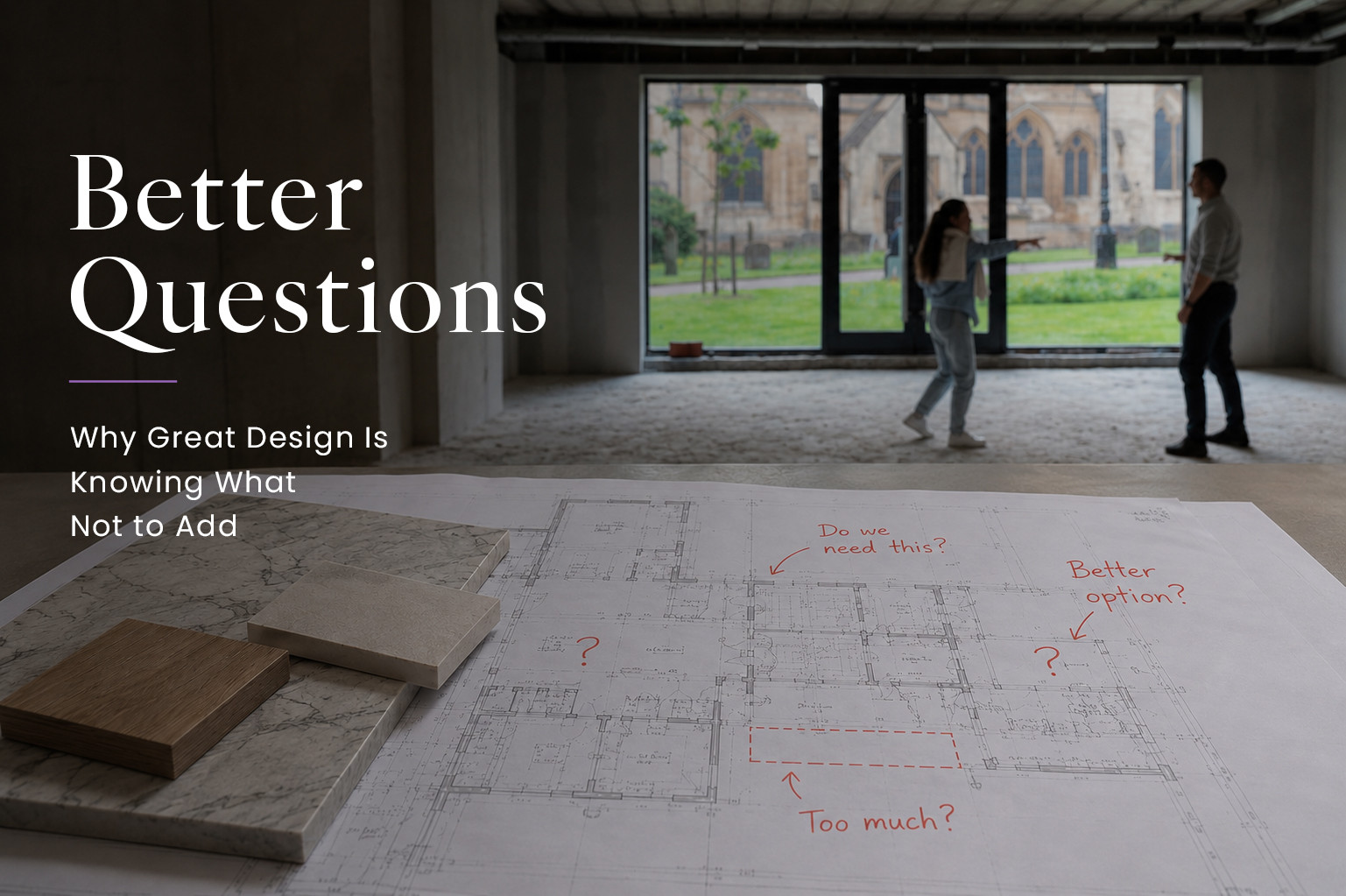
But one of the most valuable parts of our role is not simply designing what is requested. It is knowing when to pause, ask a different question, and sometimes recommend a different direction altogether.
7 minute read
29th July, 2026 | Remarcable
The biggest design mistakes are rarely the result of bad ideas. They're often the result of too many good ones.
Every project begins with a long list of ideas. A statement feature wall. More waiting seats. Premium finishes throughout. Bespoke joinery. Additional rooms.
On paper, each decision sounds reasonable. After all, if you are investing in a new space, why not include everything you have always wanted? But one of the most valuable parts of our role is not simply designing what is requested. It is knowing when to pause, ask a different question, and sometimes recommend a different direction altogether.
That judgement does not come from personal preference. It comes from seeing how spaces perform long after the design process is complete; which decisions make everyday experiences easier, which create unnecessary frustrations, and which investments continue to deliver value years later.
Over time, we have realised that the decisions clients appreciate most are not always the ones they were most excited about at the beginning. More often, they are the decisions that make the space easier to use, easier to maintain, and better equipped to support the people inside it.
These are not decisions we challenge because there is a right or wrong answer. We challenge them because experience has taught us that the first solution is not always the one that delivers the greatest long-term value.
The best outcome usually comes from asking a better question before committing to an answer.
Here are five decisions we regularly challenge, and why.
"Let's Create a Statement Feature"
The question clients often ask: "What can we add to make this space memorable?" The question we encourage clients to ask: "What do we actually want people to remember when they leave?"
Every client wants their space to make an impression. Whether it is a feature wall, bespoke joinery, artwork or installation, the intention is understandable: create something distinctive.
Sometimes that's exactly the right decision. But experience has taught us to ask a different question before committing to it.
Will this improve the experience, or become the thing people notice first?
That is a very different conversation. Why? Because the most noticeable element does not always create a memorable space. The more important question is whether that feature supports the experience you want people to have. People rarely leave talking about a feature wall. They leave talking about how confident they felt, how they were treated, or how easy the experience was. Design should reinforce those memories, not compete with them.
If you want patients to feel confident, does a statement wall achieve that, or would a more welcoming arrival, better lighting, clearer wayfinding, or a more considered first interaction have a greater impact? If you want clients to recognise your expertise, does the investment communicate quality, trust and care, or is it simply something that photographs well?
The strongest spaces are not remembered for a single dramatic feature. They are remembered because their decisions work together to create a consistent feeling.
"Let's Add More Seating"
The question clients often ask: "How many chairs do we need?" The question we encourage clients to ask: "What is making people wait, and how can we improve that experience?"
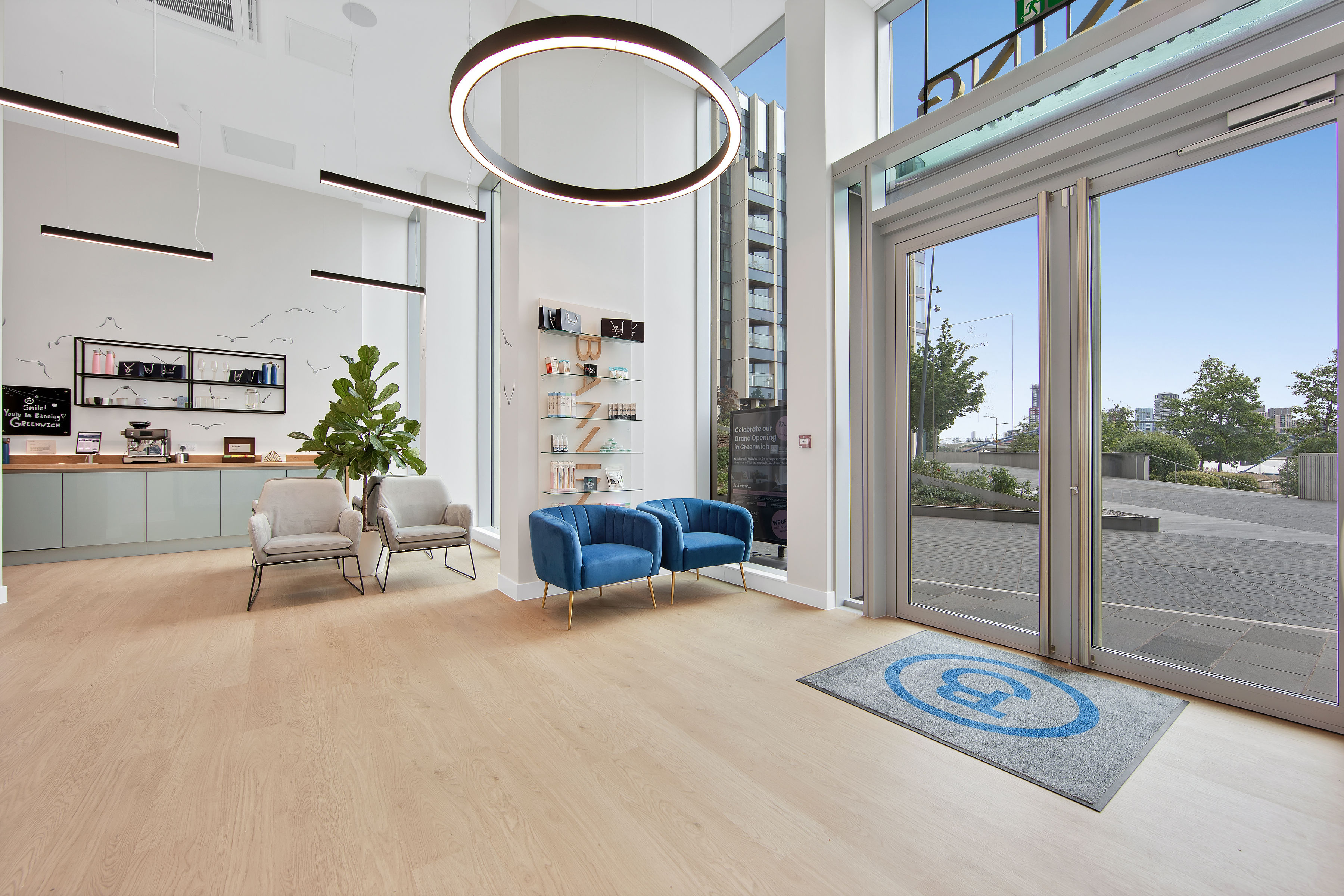
This is one of the most common conversations we have, particularly in spaces where people regularly wait, arrive, or move through a process. Waiting is often unavoidable. The challenge is not always eliminating waiting; it is understanding how people experience that time. A waiting area communicates messages before anyone speaks to a patient.
Does the space feel organised or chaotic? Private or exposed? Comfortable or clinical?
Delayed appointments in healthcare are common and often outside of a practice's control. That changes the question completely. Rather than asking how many people can wait comfortably, we ask how the environment can make that wait feel shorter, calmer, and more predictable.
Design can influence how waiting feels. More personal space for each person, softer lighting, clearer information about what happens next, thoughtful acoustics, refreshments where appropriate, and even a view outside can all reduce uncertainty and make time feel better spent. None of these remove the wait itself, but together they can transform how people experience it.
Across many projects, we have found that improving patient flow often delivers a greater impact than increasing seating capacity. Adding more chairs may solve a capacity issue, but it does not necessarily improve the experience of waiting.
Good design looks beyond the number of seats and considers how the entire journey feels from the moment someone arrives to the moment they leave.
"Let's Upgrade Every Finish"
The question clients often ask: "How do we make everything feel premium?" A different way of thinking is "Which materials will genuinely earn their investment every day?"
Quality materials matter. They influence durability, maintenance, atmosphere, and how a space ages. But premium does not always mean specifying the most expensive option everywhere. The better question is how each surface will perform over time.
Understanding those differences allows investment to be focused where it will continue delivering value years after the project is complete. Other areas may benefit just as much from carefully selected alternatives that perform well and maintain the overall quality of the space.
That is not about reducing specification. It is about understanding where premium specification genuinely adds long-term value and where practicality is the smarter investment.
The right material is not always the most expensive one. It is the one that performs best in its environment.
A reception worktop may need to withstand constant cleaning and daily contact. A waiting area fabric may look beautiful on day one, but if it stains easily or wears quickly under heavy use, it can soon undermine the impression the space was designed to create. Equally, a natural stone surface may feel luxurious, but if it requires intensive maintenance to keep it looking its best, it may not be the most practical long-term choice.
These are the kinds of decisions that rarely attract attention during a design presentation, yet they have a significant impact on how a space performs years later.
Some of the most valuable upgrades are not immediately visible. They are the decisions that quietly prevent maintenance issues, reduce replacement costs, and protect the experience long after the project is complete.
Where We Encourage Clients to Invest Instead
The question clients often ask: "What will make the biggest visual impact?" The question we always come back to is "What will make everyday life easier?"
Some of the decisions clients appreciate most are rarely the ones that receive the most attention during the design process. They are the decisions that remove small frustrations every day.
For example, better storage is not simply about having more cupboards. It is about removing the small frustrations that slow people down every day. Every time a member of staff leaves a room to find equipment, searches for supplies or works around unnecessary clutter, the task becomes slightly slower and more mentally demanding. Good storage removes hundreds of these invisible interruptions over the course of a year, allowing people to focus on the work that really matters.
Thoughtful lighting is not just decorative. It can influence focus, comfort and how people experience a space throughout the day. Well-planned layouts are not just about fitting everything in. They can improve movement, communication and flexibility.
These decisions may not always appear in photographs, but they often determine how successfully a space performs.
When we recommend removing something, it is never simply to reduce costs. It is usually because we have seen another investment deliver greater long-term value. When clients come back to us for their next project, it is often these practical decisions they remember; not because they stand out visually, but because they made life noticeably easier.
Experience has taught us that the best investments are often the ones people stop noticing because they are simply working as they should.
"Let's Make It Flexible"
The question clients often ask: "What works for us today?" The question we encourage clients to ask: "What happens if the business changes in five years?"
A space should support where a business is going, not only where it is today.
Growth, changing teams, new services, and evolving customer expectations can quickly make a poorly planned space feel restrictive.
Thoughtful planning means asking whether rooms could serve different purposes in the future, whether teams could expand without major disruption, whether layouts are adaptable, and whether today's decisions avoid expensive alterations later.
The best spaces are not designed for one moment in time. They are designed to continue supporting the people and businesses inside them as they evolve. Designing for flexibility often means making small decisions today that prevent major refurbishment costs tomorrow.
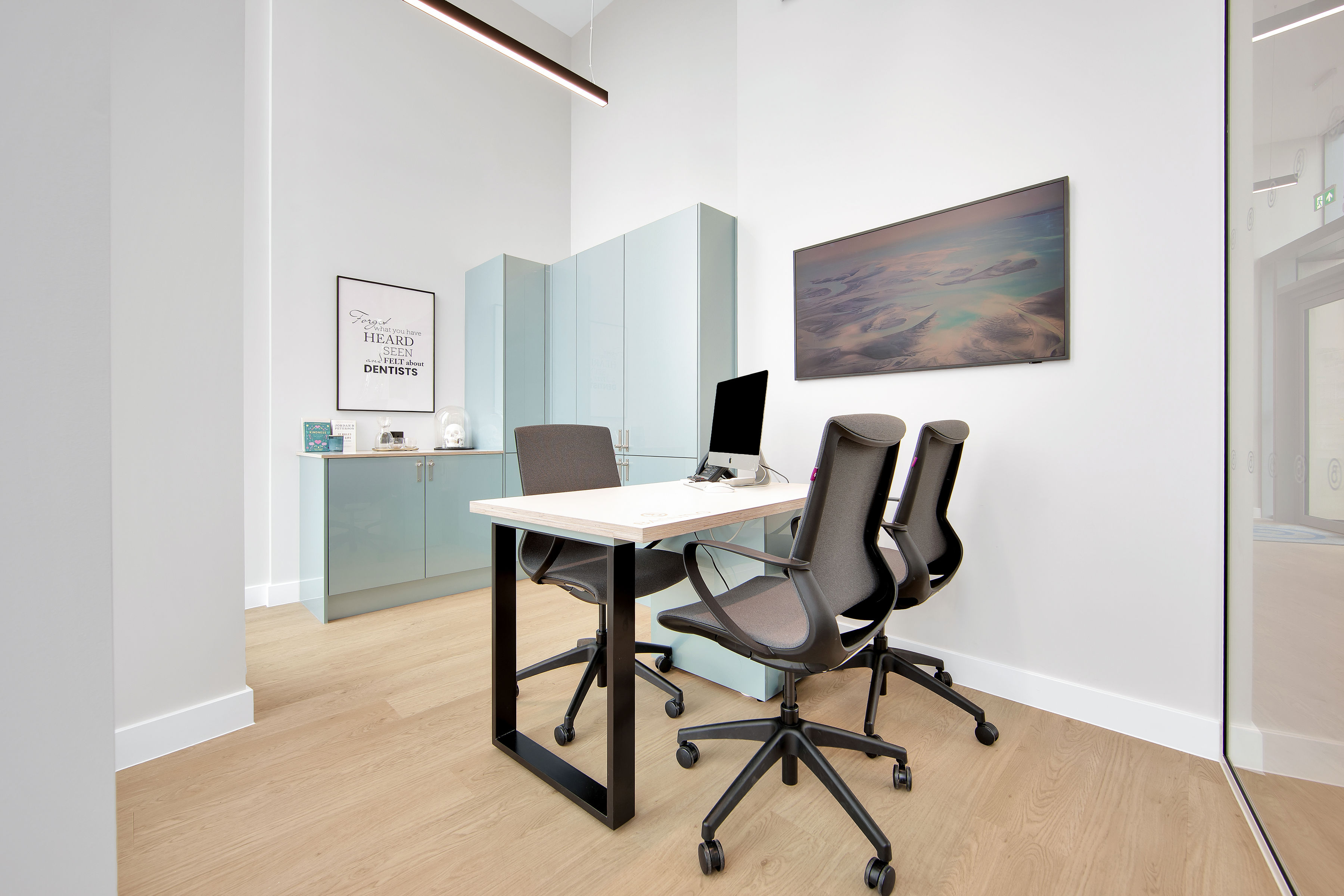
There is a common misconception that better design means adding more.
More features. More materials. More furniture. More visual impact.
In reality, some of the strongest design decisions involve knowing when not to add something. Not because simplicity is always better, but because every element should earn its place and serve a purpose.
Experience changes the questions you ask. Instead of asking what else could be included, it encourages you to ask what the space genuinely needs to perform at its best.
We ask: Will this improve how the business operates? Will it make everyday life easier for the people using the space? Will this still feel like the right investment five years from now?
Those questions have shaped every project we have delivered. They help clients avoid spending money on things that add little long-term value while protecting investment in the decisions that genuinely improve performance, experience and longevity. It is also the reason clients involve us before decisions become difficult or expensive to change.
That is where design becomes more than aesthetics. It becomes judgement.
The best projects are not defined by how many ideas make it into the final design. They are defined by the quality of the decisions made along the way.
Sometimes that means saying yes to an idea that transforms a space. Sometimes it means challenging an assumption before it becomes an unnecessary cost, an operational compromise, or a missed opportunity.
Our role is not to remove ideas for the sake of it. It is to help clients make decisions they will still be pleased they made years after the doors open.
Great design is not about adding everything possible. It is about asking better questions before making expensive decisions.